EFTAIOS - Escape From The Aliens In Outer Space
Digital LAN adaptation of Escape From the Aliens in Outer Space with real‑time multiplayer and ghost tracking.
EFTAIOS — How the Game Works
EFTAIOS started as a physical board game night. My friends and I were playing Escape from the Aliens in Outer Space and kept saying, "this would work better as a video game." So I built it, play‑tested it with friends, and it worked surprisingly well. It still needs polish, but the core loop feels great. I later hosted it on Render so we could play from different networks.
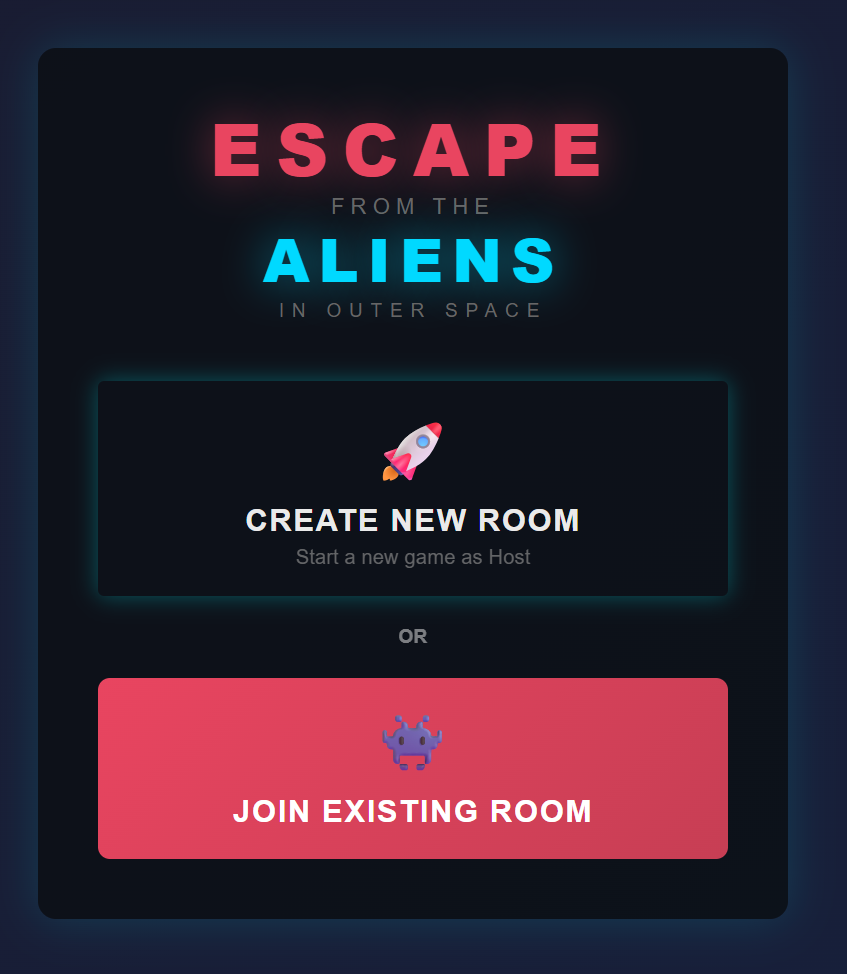
1) Host or Join a Room
Create a room on the host machine or join one from any device. The goal is friction‑free setup so the group can start quickly.
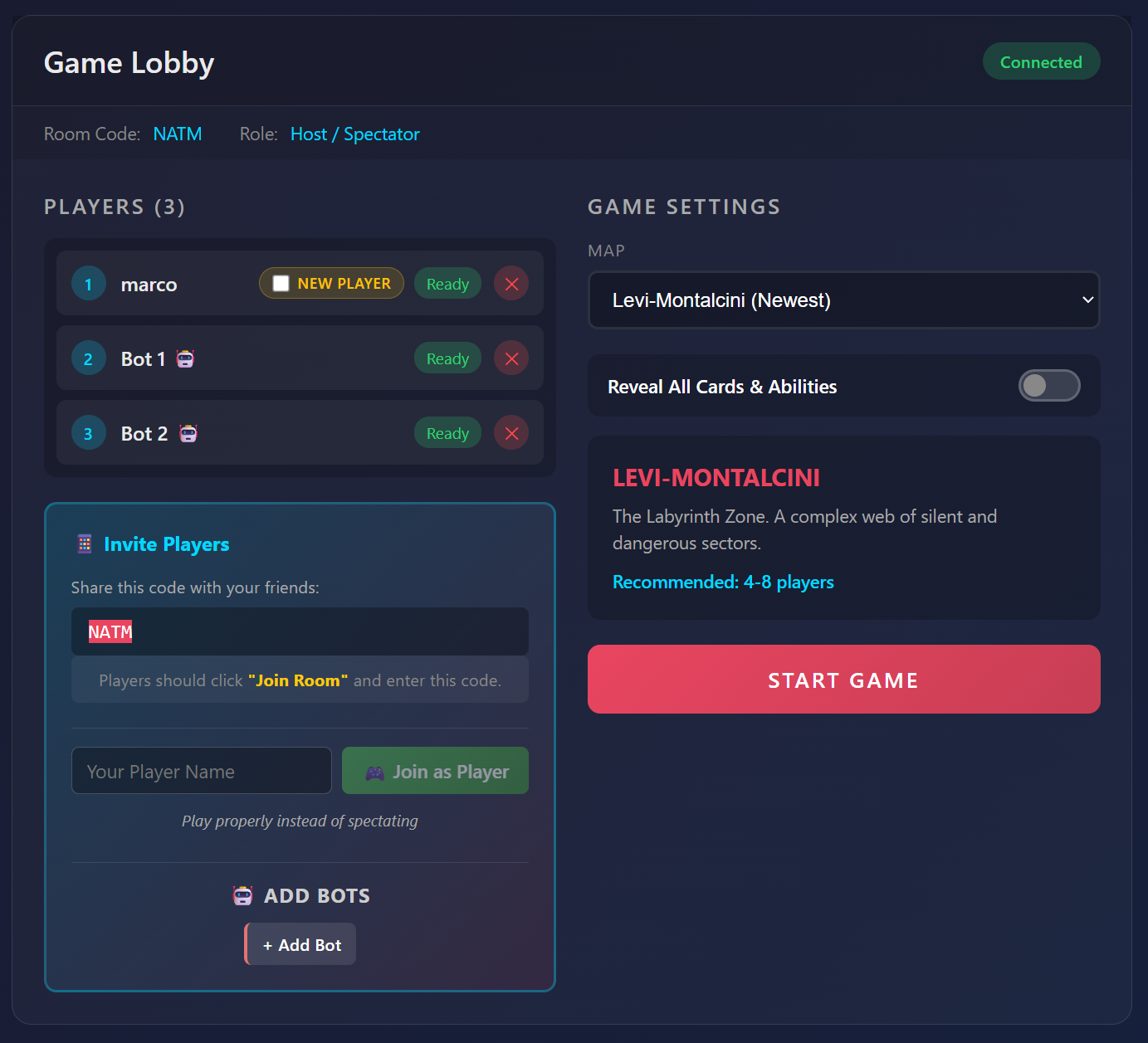
2) Lobby → Roles, Map, & Bots
The lobby is where the host configures the match. Players ready‑up, bots can be added, and the map is selected. I'm especially proud of the bots — they were surprisingly hard to model, and I built them with the help of Claude Code.
3) Character Roles & Abilities
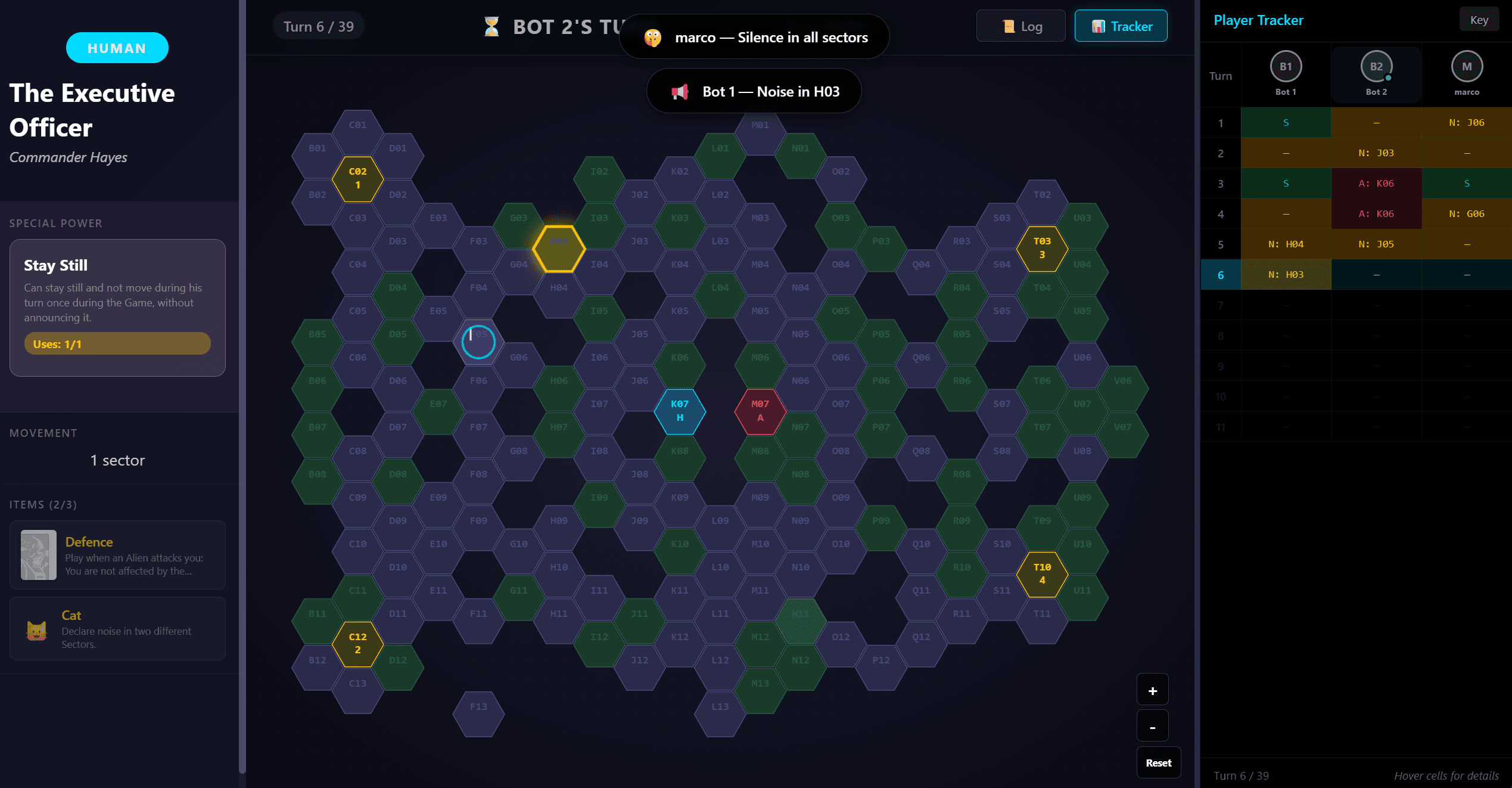
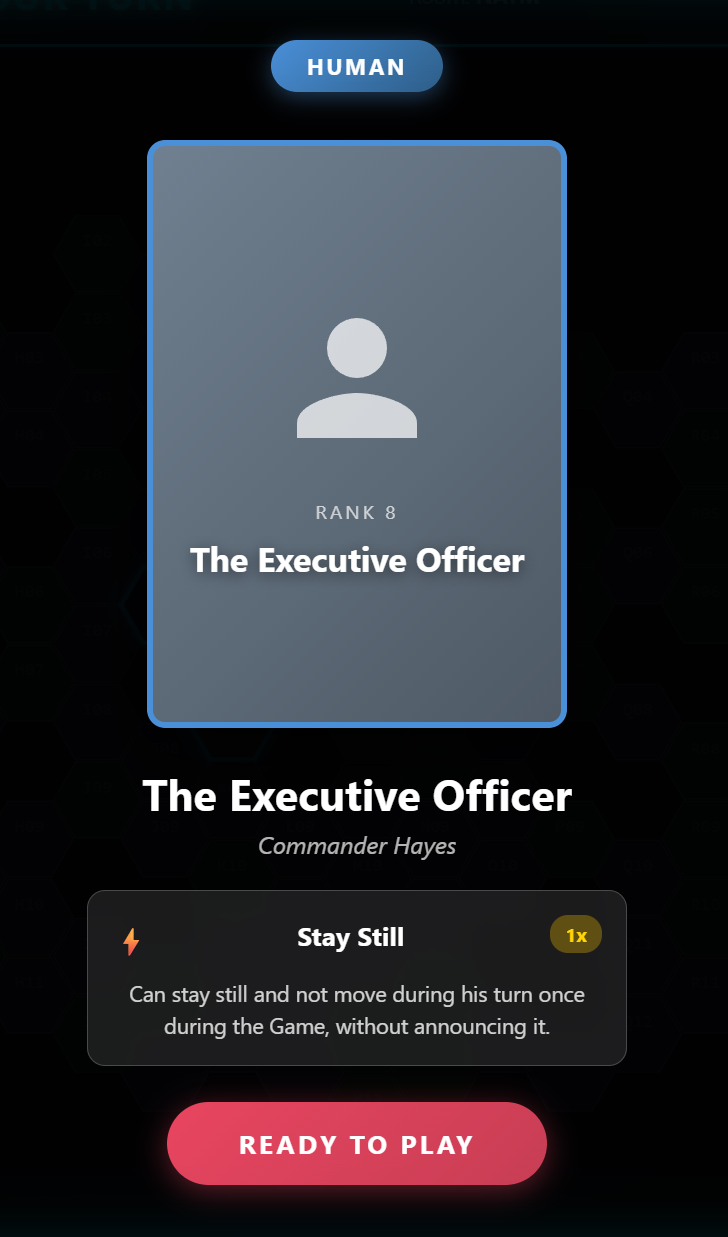
Each player becomes a Human or Alien, with a unique character and power. Humans are trying to survive and escape; aliens are hunting. The abilities add just enough asymmetry to keep turns tense.
4) The Core Loop: Move → Noise → Track
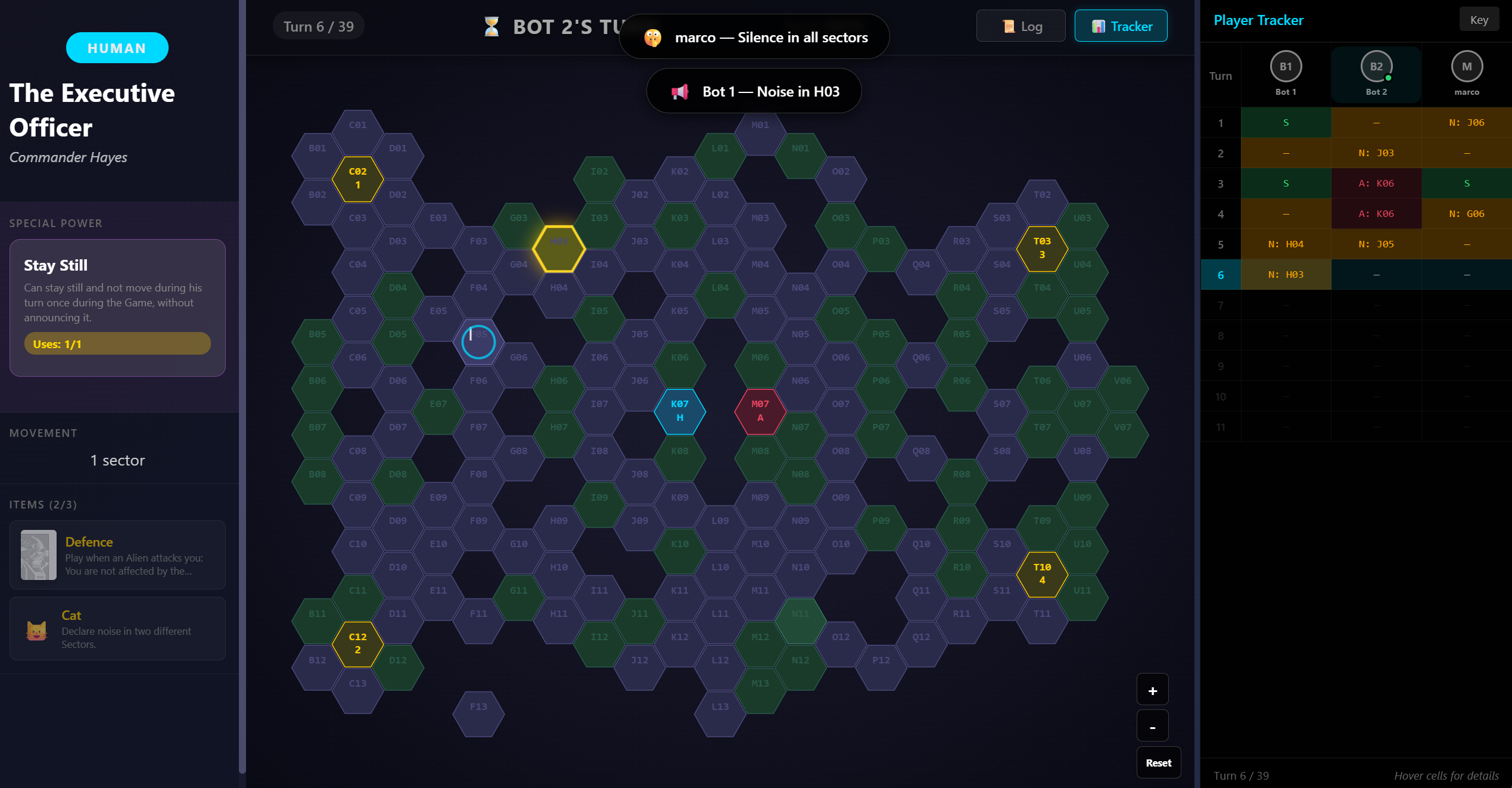
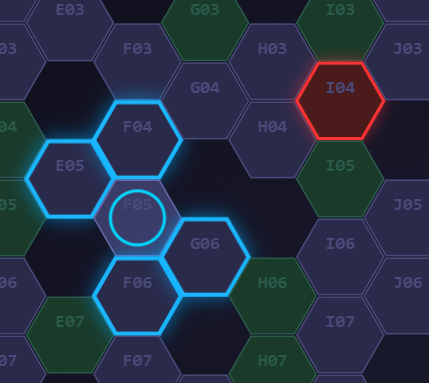
Players move on a hex grid. When you enter dangerous sectors, you draw a card and must announce a noise location — sometimes true, sometimes a bluff. That single rule drives the entire social deduction loop.
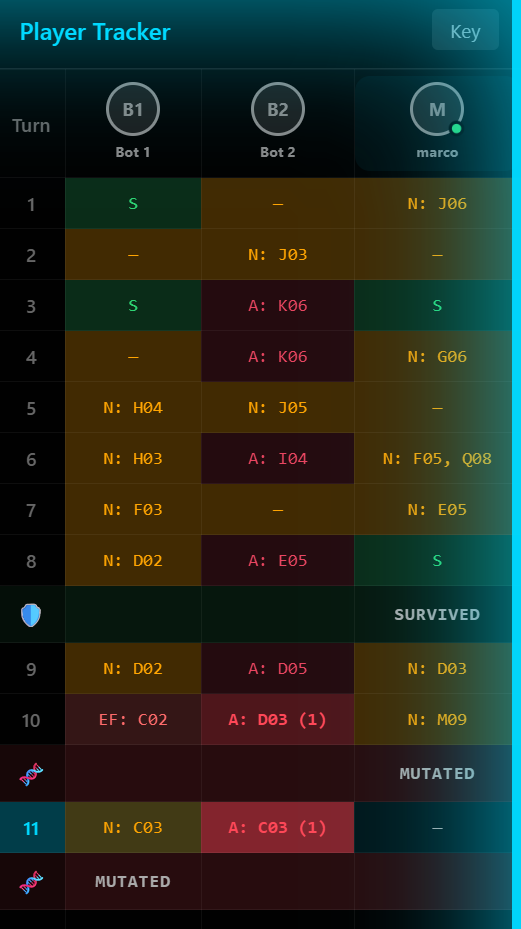
5) Player Tracker (Game Memory)
The tracker logs every declared noise, attack, and outcome so the table can reason about what's real and what's a bluff.
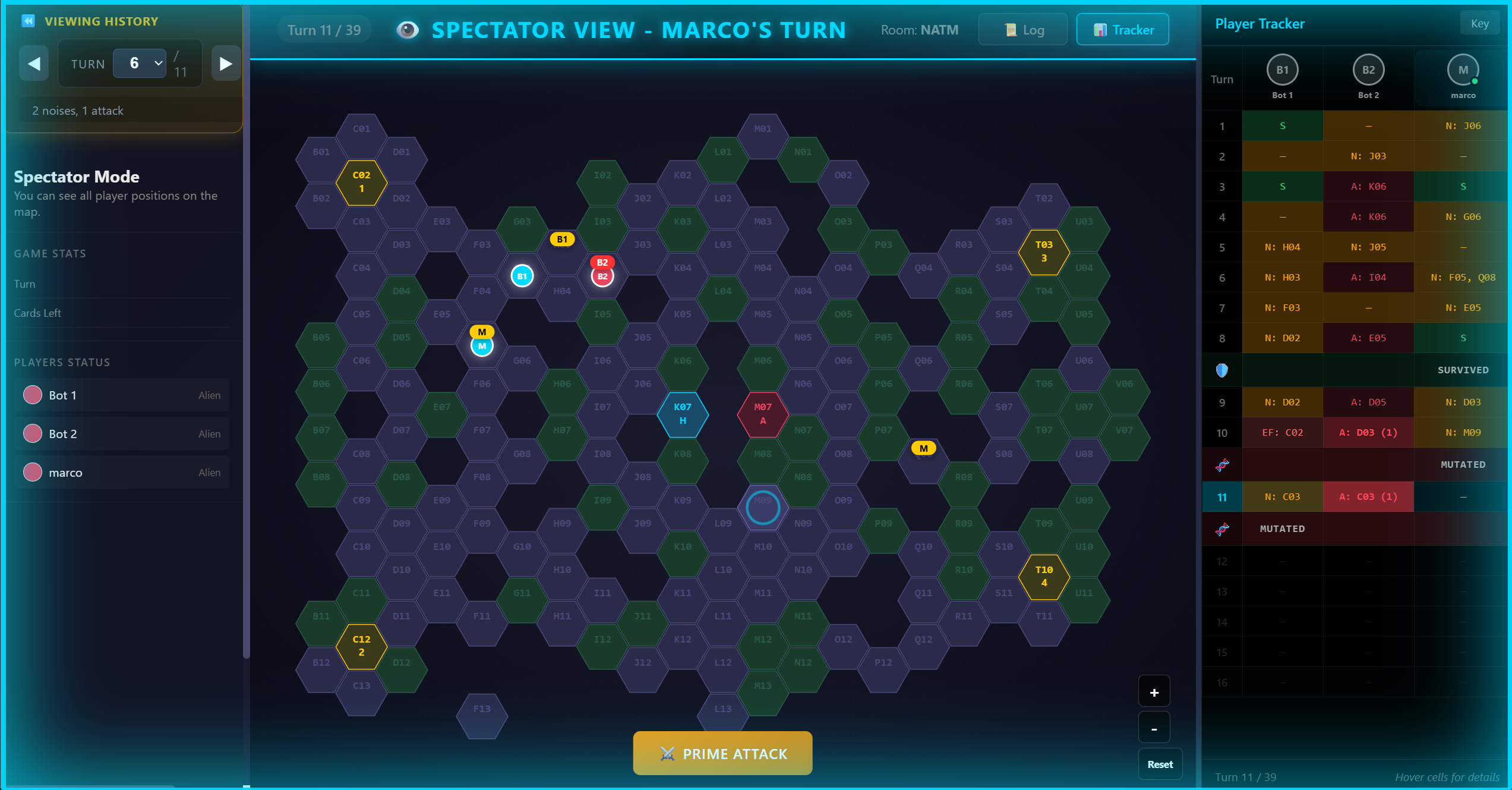
6) Spectator Mode + Turn History
Spectator mode reveals all positions, making it perfect for a shared screen during a game night. At the end of the game, you can review the full turn history to see where each player said they were versus where they actually were.